How Fake Cybersecurity Internships Exploit Beginners — And How to Spot Them
Scam internships are the phishing emails of career building: generic, deceptive, and designed to extract value from you while giving nothing back.
Why This Blog Exists
As a cybersecurity beginner, the hunger to build experience is real. But that’s exactly what some shady companies prey on. They lure new learners with internship offers that appear impressive on the surface but are nothing more than glorified content marketing schemes, LinkedIn clout farms, and certificate vending machines.
In this post, I’m going to break down:
Fake Companies exploit beginners
Red flags to look for
Proof from my own experience
How to find actual internships that build skills
The Internship Paywall Scam
Let’s call it what it is; pay-to-play internships. Companies use the label of “training” or “certification” to bypass ethical scrutiny and trick people into thinking it’s normal to pay to work. Here are real names of companies pulling these stunts:
Prodigy InfoTech
Charges ₹129 at the end of the internship just to generate a certificate.
Tasks are often generic and self-guided.
Tasks must be posted on LinkedIn weekly.
2. Brainmatrix Solution
Tasks must be posted on Linkedin weekly.
Certificate fee ranges from ₹199 to ₹699 depending on the duration (1 to 6 months).
No verifiable certificate validation or credible mentorship.
3. The Red Users
Charges ₹99 to generate a certificate.
Requires interns to post the offer letter publicly on LinkedIn.
4. InLighn Tech (InLighnX Global Pvt Ltd)
Instant Access Promise: Minutes after the Google Meet session, they promised access to an “internship portal” within 5 minutes — but only after payment through Razorpay
They offered a price list ranging from ₹499 to ₹1399 for internship durations from 1 to 6 months — all under the label of “optional”, but cleverly marketed with discounts, fake urgency, and claims of top stipends.

Psychological Hooks Used
“Top intern stipend ₹15k” for bait.
Claim of discounts up to 52% on “original” prices.
Immediate registration pressure post-meeting.
5. Future Intern
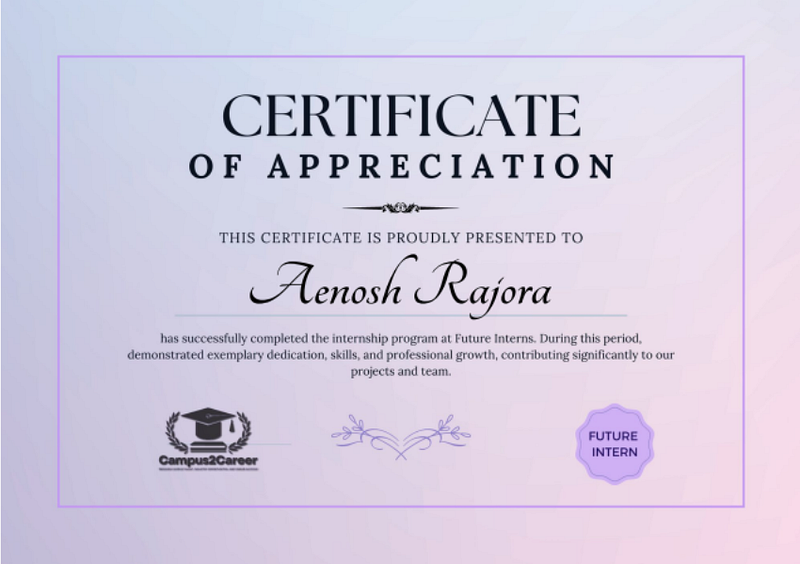
Offers an “appreciation certificate” that looks like a Canva template.
No completion certificate, no verification QR, ID, or signature.
My own experience: submitted tasks, got a generic cert, no contact, no mentorship.
Requires ₹99 to generate a certificate.
These internships farm your free labor and LinkedIn presence, then charge you to prove you did it.
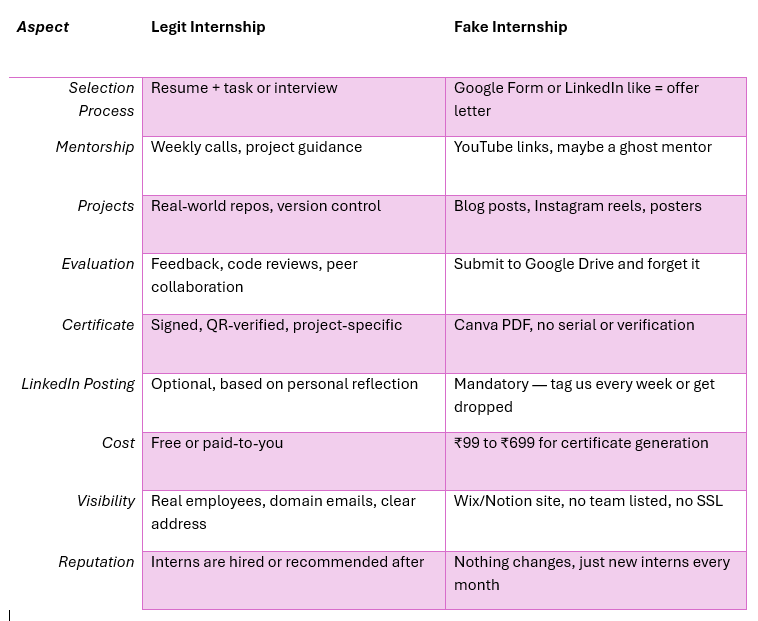
How to Spot a Fake Internship (Red Flags)
Here’s a breakdown to separate the clout-farming traps from real learning opportunities:
Real World Evidence (My Case: Future Intern)
I took part in an internship offered by Future Intern. After weeks of submission:
I received only an appreciation certificate
No verification, no ID, no mention of tasks.
The offer was distributed through a generic Google Form, and no communication happened post-submission.
They don’t ask for money upfront — they ask for your time, posts, and trust first, then switch to the pay model subtly.
How to Find a Legit Cybersecurity Internship
Use these battle-tested tactics:
Vet like a Hacker
whois domain.com— check domain age and legitimacy.Search
“Company Name” site:linkedin.com— do they have real employees?Look for HTTPS, contact info, address, and a company blog.
Seach Reddit, Quora, or even X for company reviews.
Message Past Intern
Hey [Name], I saw you interned at [Company]. Was it hands-on or mostly self-paced content? Did you have real mentors or projects?
If they hesitate or only mention “posting weekly”, run.
Ask These Questions Before Accepting

Where to Find a Real Internship (and Learn More Than Posting Reels)
TryHackMe Workspaces and Hack The Box Collabs
Outreachy, Google Summer of Code, MLH Fellowship
Open-source contributions (ZAP, Osmedeus, Recon-ng)
Twitter/X job threads by real red teamers
Cybersecurity Discord servers with project calls
Your own blog/tool/automation project
TL;DR — Don’t Get Farmed
If you’re doing an internship:
You shouldn’t be the one paying.
You shouldn't be forced to post for visibility.
You should walk away with real experience, not just a PDF.
If You’ve Been Scammed
Share your experience — ethically, factually, without hate.
Warn others.
Learn and move forward. You’ve already levelled up just by seeing through it.
Don’t fall for internship phishing — you’ve been trained to fight those in the real world.
Last updated