# Deanonymizing Threat Actors: A Deep Dive
TL;DR — Anonymity is layered and fragile. Tools (Tor, VPNs, burner phones, mixers) give actors cover, but humans slip. A single reused username, email, image, or certificate can start a chain of pivots that exposes a real person. This post shows how to find those slips, commands/tools to use, and exact mitigations defenders should implement.
## Overview
Anonymity has long been a cornerstone for cybercriminals. From darknet markets to ransomware operations, maintaining an untraceable identity allows actors to evade law enforcement and continue malicious operations. Yet, history repeatedly shows that even the most sophisticated cybercriminals eventually make mistakes operation security (OPSEC) failures that enable investigators, researchers, and intelligence analyst to pierce the veil of anonymity.
Deanonymization is the process of correlating seemingly disparate digital artifacts to reveal the real identity of a threat actor. This is not the same as attribution, which is the formal linkage of an attack to a specific person or state actor with evidentiary proof. Deanonymization,, however, is a powerful intelligence practice used by defenders, law enforcement, and researchers to understand and counter adversaries.
## How Cybercriminals Attempts to Stay Anonymous
Threat actors deploy layers of anonymity, often combining multiple methods:
* **VPNs & Proxies:** Hide source IP addresses.
* **The Tor Network:** Routes traffic through onion relays to obscure location.
* **Multiple Personas:** Use of different online handles across forums, marketplaces, and chat groups.
* **Burner Phones & VoIP:** Disposable devices for communications.
* **Temporary Email Addresses:** One-time inboxes for registration and contact.
However, maintaining this anonymity consistently over years is incredibly difficult. Humans are prone to error, and even a single slip can unravel carefully built false identities.
## OPSEC Failures: How Anonymity is Lost
Cybercriminals often expose themselves through:
* **Reuse of Identifiers:** Recovery emails, phone numbers, or usernames used across accounts.
* **Metadata Leakage:** EXIF data in uploaded images or file properties.
* **Consistent Working Hours:** Revealing time zones or employment schedules.
* **Accidental Disclosure:** Mentioning personal details while role-playing as a persona.
* **Stylometric Patterns:** Unique linguistic fingerprints across posts and code.
Case studies highlights how small missteps lead to arrests:
* **Sabu (LulzSec)**: Linked his IRC chat identity to a personal website.
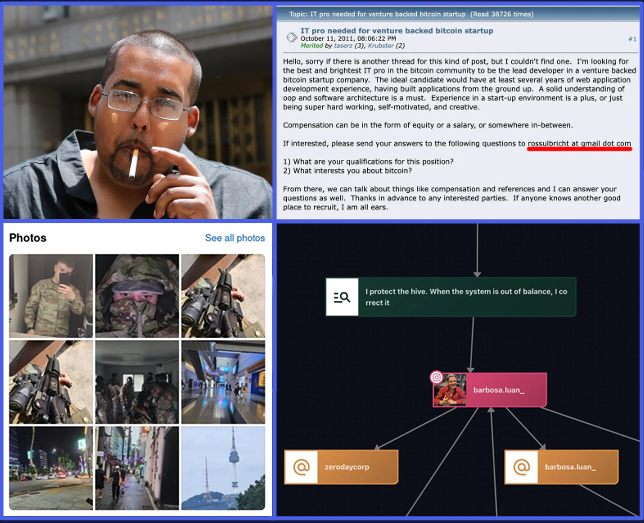
* **Dread Pirate Roberts (Silk Road)**: Used a personal email when creating a darknet account.
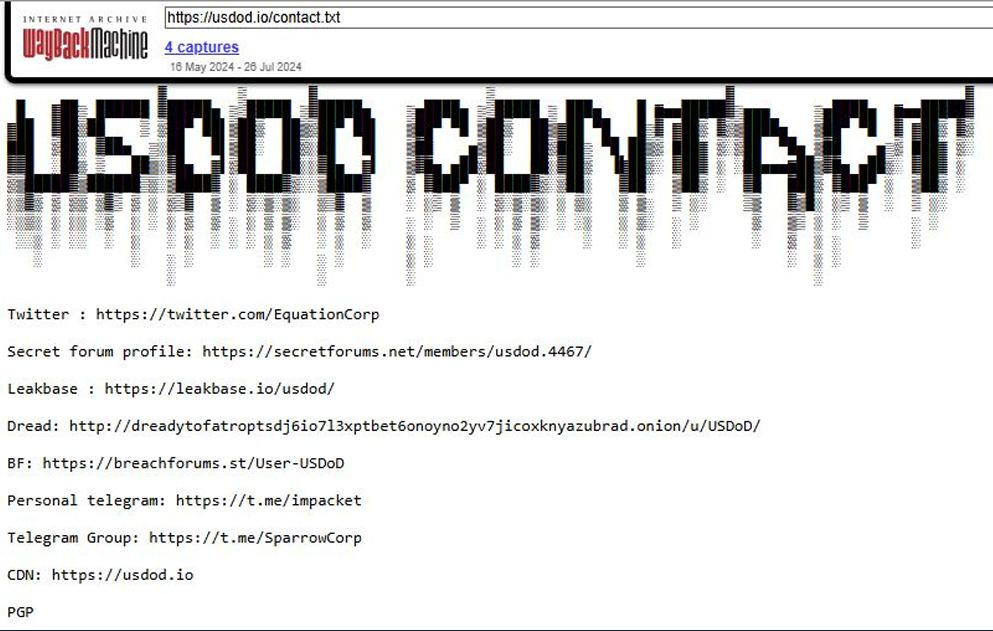
* **USDoD (BreachForums):** Reused distinctive phrases across personal and criminal profiles.
* **Kiberphant0m:** Uploaded a personal camera roll image to Telegram.
## Deanonymization Techniques
### Search Engine Exploitation (Google Dorks)
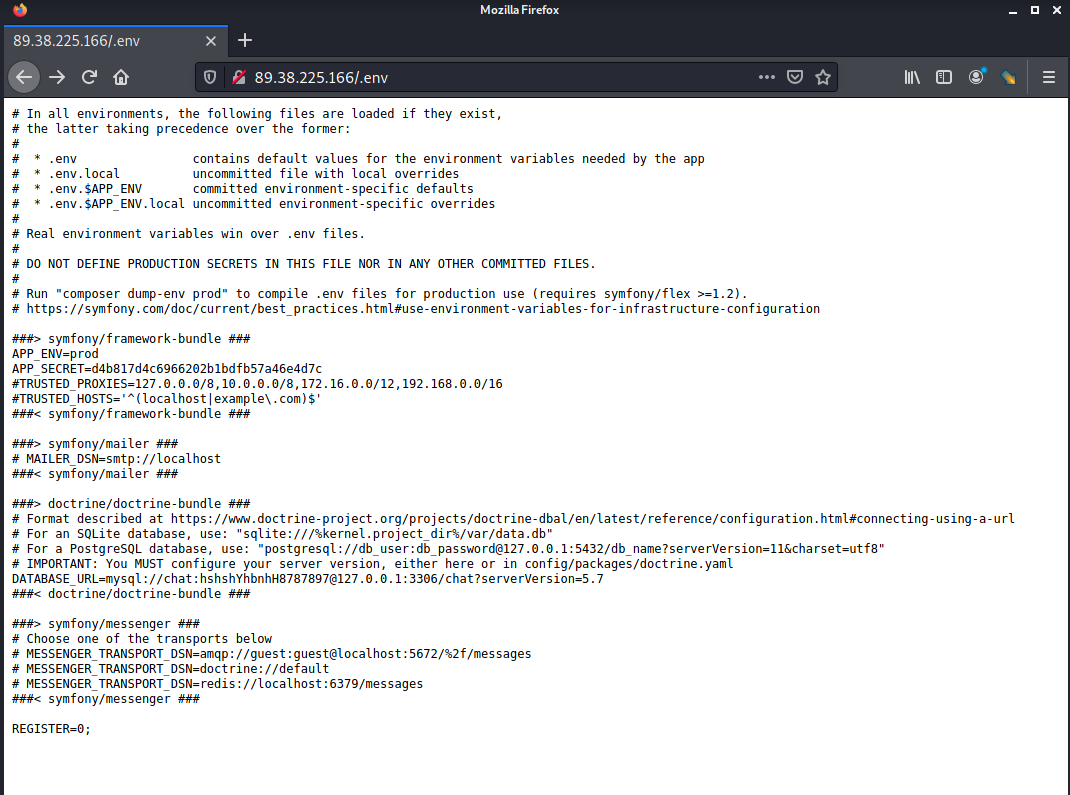
Cybercriminals leave traces across the open web. Using advanced operations (e.g., `site:`,`inrul:`,`ext:`), analyst can surface hidden pages, config files, or leaked datasets.
Examples:
* "username" site:forum.com
* "" site:pastebin.com
* ext:log | ext:cfg site:example.com
### Username & Email Pivoting
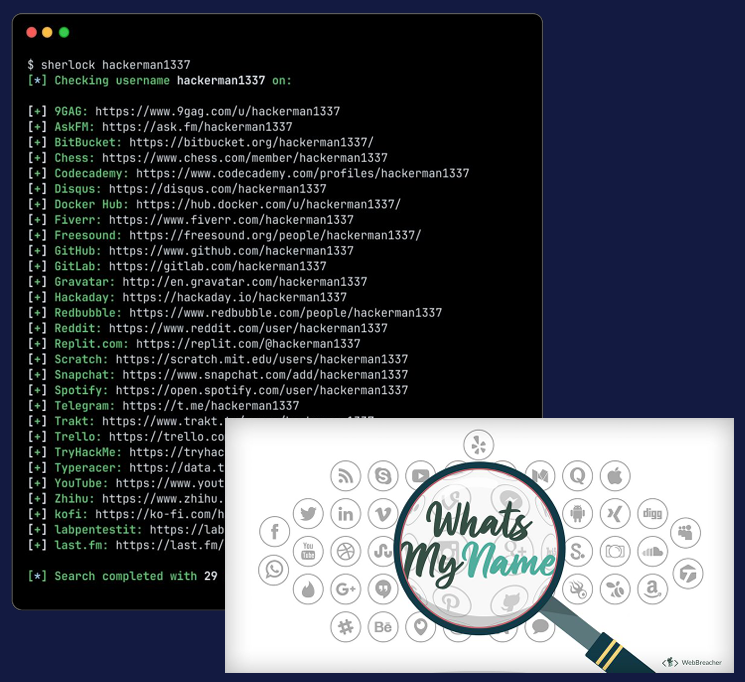
Many criminals reuse handles. Tools such as **Sherlock, Maigret,** and **WhatsMyName** allow investigators to check username presence across hundreds of platforms.
From usernames, analysts pivot to emails, then passwords, and finally to personal accounts revealed in leaked databases. This chain reaction often uncovered real-world identities.
Example:
* Username `xxxStriker` in a Torrent Invites leak -> linked to multiple emails -> tied to a zoosk account.
```
# Sherlock
git clone https://github.com/sherlock-project/sherlock.git
cd sherlock
python3 sherlock.py target_username
```
### Email & Phone Lookups
Emails can be enriched using tools **GHunt,** which can reveal recovery emails, phones numbers and linked accounts. Phone numbers, meanwhile, can be analyzed with **PhoneInfoga** or **Numlookup**, sometimes revealing real-world identities or service providers.
```
# phoneinfoga example
phoneinfoga scan -n "+1XXXXXXXXXX"
```
### Domain and Infrastructure Analysis
Investigators leverage pasive and active techniques:
* **Whois & Passive DNS** for historical ownership data.
* **Wayback Machine** for archived versions of siltes.
* **URLScan & Port Scanning** for live reconnaissance.
* **Certificate Transparency Logs** to catch domain misconfigurations or shared infrastructure.
Even sloppy phishing kits often reveal Telegram buyt tokens or personal infrastructure in their source code.
```
# whois
whois example.com
# check cert transparency
curl 'https://crt.sh/?q=%25example.com&output=json' | jq
# urlscan quick submit view
curl -X POST "https://urlscan.io/api/v1/scan/" -H "API-Key: $URLSCAN_KEY" -d '{"url":"http://example.com","public": "on"}'
# view page source quickly
curl -sL http://example.com | sed -n '1,200p'
```
### IP Analysis
Using services like **Shodan**, analysts examine open ports, banners, and TLS certificates. Active recon can reveal reused keys or host fingerprints that link back to known threat actor infrastructure.
```
# shodan CLI
shodan search "apache country:US"
shodan host 1.2.3.4
# nmap banner grab
nmap -sV -p22,80,443 --script=banner -Pn 1.2.3.4
```
### Linguistic Stylometry
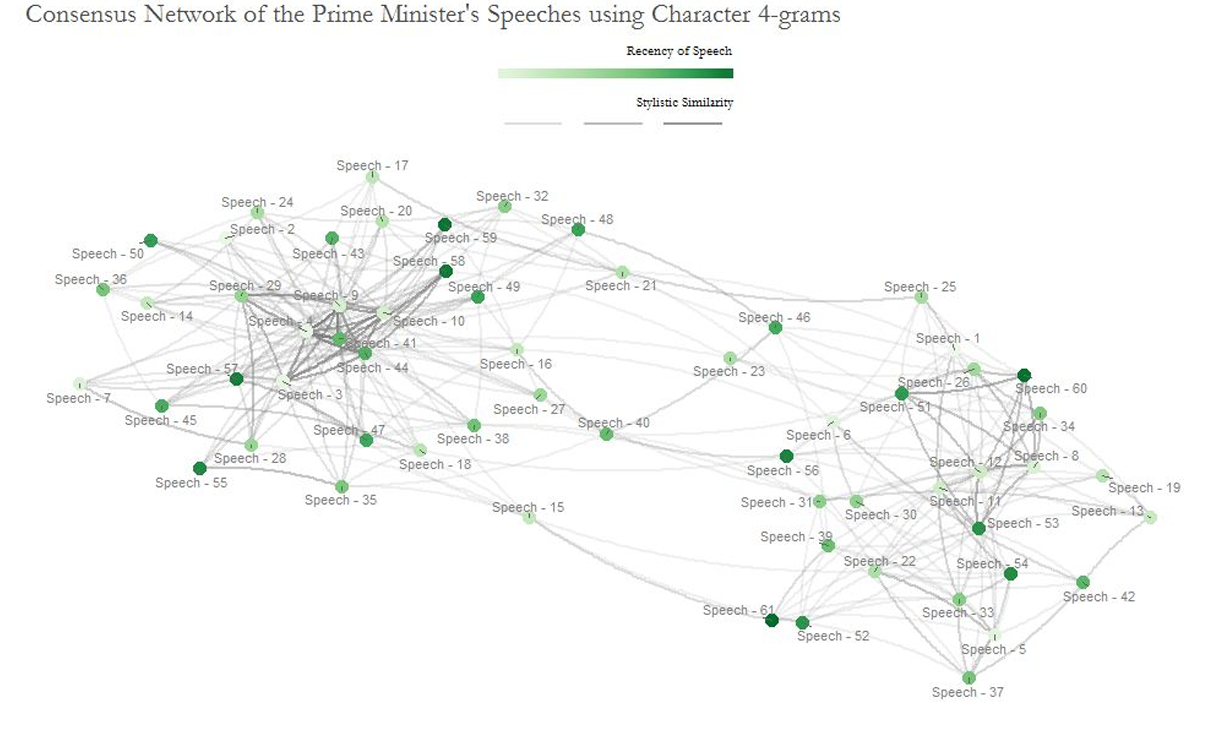
Language is a powerful biometric. Writing patterns, consistent misspellings, slang usage, and even code comments betray identity. Stylometry tools can correlate writing across darknet forums, GitHub repositories, and personal blogs.
```
# pseudo-workflow
# 1. collect texts -> texts = [doc1, doc2, ...]
# 2. preprocess: lowercase, remove punctuation, tokenize
# 3. compute TF-IDF vectors
# 4. cosine similarity between documents -> cluster / high similarity flagsw
```
### Archival & Super Timelines
Analysts build unified timelines from multiple data sources logs, social media, forum posts, leaks to infer time zones, activity cycles, and possible identities. Tools like **Hunchly**, **SingleFile**, and **Zotero** ensure evidence persistence.
### Cryptocurrency Tracing
While many crimiinals rely on Bitcoin, Ethereum, and Monero for payments, blockchain forensics can pierce the illusion of anonymity:
* **Chain Hopping** detection (e.g., BTC -> ETH -> XMR).
* **Mixers & Peel Chains** Analysis.
* **Tracing ransomware wallets** using tools like **Chainaalysis** and **TRM Labs**.
```
# get tx list for a BTC address (example with blockchair API)
curl "https://api.blockchair.com/bitcoin/dashboards/address/" | jq
# check token transfers for an ETH address (etherscan api)
curl "https://api.etherscan.io/api?module=account&action=txlist&address=&apikey=$ETHERSCAN_KEY" | jq
```
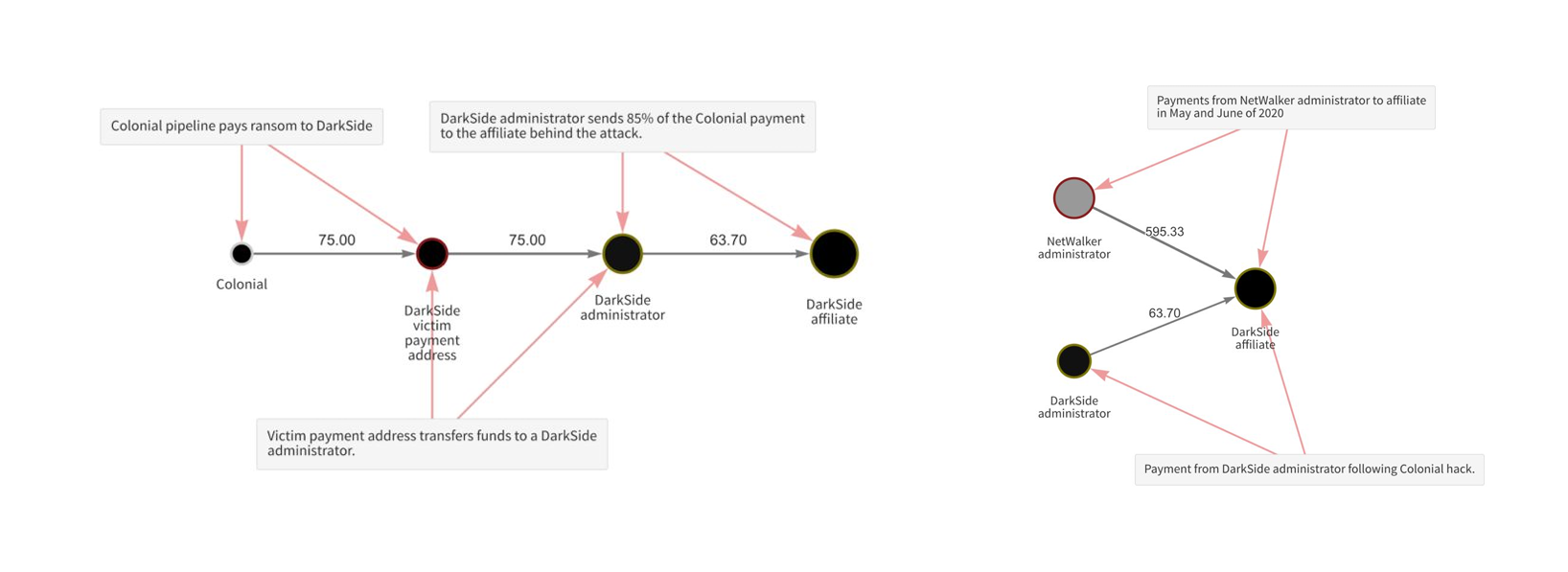
Notable example: The Colonial Pipeline ransom traced and partially seized by the FBI.
## Real-World Case: BassterLord
Bassterlord, a LockBit affiliate and ransomware operator, was deanonymized through a layered investigation:
* Email searches via Predicta Search.
* Social media footprints (Twitter, VK, OK.run)
* Linked YouTube channel and dating profiles.
* Even mundane activities like dentist reviews tied the persona to a real-world identity.
* A LockBit tattoo provided indisputable proof of involvement.
This case illustrates how seemingly harmless personal activity creates digital breadcrumbs that undermine operational anonymity.
## Ethical & Legal Boundaries
Deanonymization walks a fine line:
* Legality: Analysts must remain observers, not participants, and avoid crossing into hacking or illegal surveillance.
* Accuracy: Correlation is not confirmation. False positives can ruin lives.
* Documentation: Digital evidence must be preserved for potential law enforcement handover.
* Caution: Public accusations without irrefutable proof can be dangerous.
## Conclusion
Cybercriminals operate under the assumption that their layers of anonymity are impenetrable. Yet, history shows that humans inevitably err, leaving behind trails of digital breadcrumbs. Through a combination of OSINT, technical forensics, infrastructure analysis, and blockchain intelligence, investigators can dismantle these false persona and reveal the identities behind them.
Deanonymization is both an art and a science. It require persistence, creativity, and the ability to cross-reference disparate data sources. As threat actors evolve, so too must our investigative methodologies.
The message is clear: anonymity is fragile and one mistake can expose the person behind the keyboard.